 Meadow & Feather
For teachers
A calm, free bird game for middle and high school classes (grades 6 to 12) that teaches real things: which bird eats what, where it lives, how it nests and how it is doing in the wild.
Why it works in class
- Real species, real photos. 118 birds in 11 habitats, each with a field guide page: size, diet, range, nest, song and IUCN status.
- Real rules. The right food brings the right bird, like a real yard: nyjer for goldfinches, nectar for hummingbirds, fruit for orioles and toucans, water for almost everyone.
- No student accounts. Students play as guests in the browser. We never ask them for a name or an email.
- Short sessions. Feeders empty slowly in real time, so ten minutes at the start or end of a lesson is enough.
- Works on school devices. Chromebooks, tablets and phones, in the browser, nothing to install.
What students learn
- Recognizing birds by color, shape, size and silhouette.
- Diet and beaks: seed eaters, insect eaters, nectar feeders, fish eaters.
- Habitats of the world, from the backyard to the rainforest, the savanna, sea cliffs and a mountain lake.
- What every wild animal needs: food, water, cover and a place to raise young. These are the same four things the National Wildlife Federation asks for in its Certified Wildlife Habitat program.
- Conservation status on the IUCN Red List, and why some species are doing well while others are not.
Lesson ideas (15 to 30 minutes)
- Food detective. Students fill one feeder with a single food and record which birds come. Then they compare notes: which food brought the most species? Which birds never came, and why?
- Beak and diet match. Pick six birds from the bird pages. Students match each beak to its diet, then check the facts on the page.
- Habitats of the world. Each group takes one habitat, lists five birds that live there and finds the place on a world map.
- Status report. Students find a bird that is Near Threatened or Vulnerable and write three sentences on why, using the range and diet on its page.
- Our schoolyard. Walk the schoolyard and score it on food, water, cover and places to nest. What one change would help birds most?
Standards
The game and these ideas connect to the Next Generation Science Standards for middle and high school life science:
- MS-LS1-4: how animal behaviors, such as nesting and feeding young, affect the chance of successful reproduction.
- MS-LS2-1: how the resources in an ecosystem, such as food and water, affect organisms and populations.
- MS-LS2-2: patterns of interactions among organisms across many ecosystems.
- MS-LS2-5: comparing ways to protect biodiversity and ecosystem services.
- HS-LS2-7: solutions that reduce the impact of human activities on the environment and biodiversity.
- HS-LS2-8: how group behavior, such as flocking, helps individuals and species survive and reproduce.
Privacy for students
Meadow & Feather is for players 13 and older. Students do not need an account: a guest keeps their game with a random ID in a cookie, not linked to who they are, and names in the game are made of nature words, with no chat or free text. Friend requests need the other player to accept, and anyone can be blocked. If some students in your class are younger than 13, play together on your screen instead. Read our privacy policy.
A class challenge and a bird of the week
- Class club. Create a club in the game and share its code with the class. Everyone works toward one weekly goal: how many different species can the class photograph together? Students still play as guests, and you can remove anyone who should not be in the club. See clubs and classes.
- Bird of the week. A new bird every Monday with a photo, a fact and its song. Show it on the board, or put the free card on your class page: bird of the week.
- Daily puzzles. A short daily bird puzzle, the same for everyone, works well as a five minute warm-up.
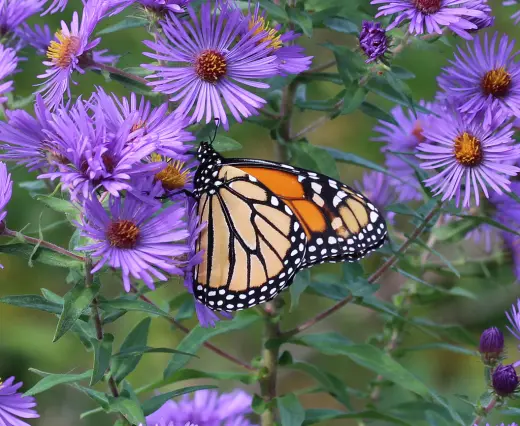
Coming soon: a pollinator garden
Monarchs, native bees and the plants they need are coming to the game: host plants for caterpillars, flowers that bloom on the real calendar, and why most backyard birds feed their young on insects. A ready pollinator garden lesson for spring.
One email when the Meadow opens, nothing else.
Tell us what would help
Printable worksheets or anything else for your class: write to hello@meadowandfeather.com with what you would use.